
Diabetes Care in Lutz, FL: Testing, Medication and the Time to Get It Right
Clear numbers, a steady plan and a provider who follows through
- Common In:
- Adults 45+ and anyone with risk factors
- Primary Causes:
- Insulin resistance, genetics, weight
- Treatment Time:
- Unhurried visits, office or telehealth
- Results:
- A1c reviewed every 3 months


Understanding Diabetes
What Is Diabetes?
If you have been searching for a diabetes doctor near me in Lutz, FL, the provider you will meet here is a nurse practitioner: Dr. Anilda Ortiz, DNP, APRN, FNP-C, a board-certified family nurse practitioner with more than a decade of diabetes and thyroid care. Diabetes is a chronic condition in which the body cannot make or use insulin well, so glucose builds up in the blood instead of fueling your cells.
Many people learn they have it from routine labs, not symptoms. The National Institute of Diabetes and Digestive and Kidney Diseases estimates that more than one in five Americans with diabetes has not been diagnosed. Care here pairs testing, medication matched to your numbers and regular follow-up for patients from Lutz, Land O' Lakes, Wesley Chapel and the greater Tampa area.
Medically reviewed by Dr. Anilda Ortiz, DNP, APRN, FNP-C. Last updated: October 2026.

The Science
Why Diabetes Happens
Understanding the Root Causes
After a meal, the pancreas releases insulin, the hormone that lets glucose move from the bloodstream into muscle, liver and fat cells. In type 2 diabetes those cells gradually stop responding, a state called insulin resistance. The pancreas compensates with more insulin, sometimes for 10 years or longer, until its beta cells can no longer keep up and blood sugar rises above normal.
Fasting glucose of 126 mg/dL or higher, or a hemoglobin A1c of 6.5 percent or higher, confirms diabetes, while an A1c of 5.7 to 6.4 percent signals prediabetes under the American Diabetes Association diagnostic criteria. Because the A1c reflects average blood sugar over roughly three months, diabetes care runs in three-month cycles rather than one reading a year.
Visceral fat around the abdominal organs drives insulin resistance, so losing even a modest amount of weight can improve blood sugar control for many patients, and a medically supervised weight loss program is often part of a diabetes plan here. Type 1 diabetes is different: the immune system destroys beta cells, insulin is required from diagnosis, and care is coordinated with an endocrinologist.
Contributing Factors
What Raises Your Risk of Type 2 Diabetes?
Identifying Your Triggers
Several factors stack together to push blood sugar out of range, and most can be measured and addressed once they are known.
Family History
A parent or sibling with type 2 diabetes roughly doubles your risk, because insulin resistance runs in families.
Excess Weight and Inactivity
Abdominal fat blunts insulin's effect and idle muscle pulls less glucose from the blood, so weight and a sedentary day both raise sugar.
Age and Ethnicity
Risk rises after 45, and Hispanic, Black, Native American and Asian American adults develop type 2 diabetes at higher rates.
Prediabetes, Pregnancy, Sleep and Stress
A past prediabetes result or gestational diabetes, short sleep, untreated sleep apnea and long-term steroid use all push blood sugar up.
How We Evaluate It
How Diabetes Is Tested and Managed Here
Labs, Monitoring and a Plan That Adjusts
Your first diabetes visit is a full evaluation rather than a quick refill. Dr. Ortiz reviews your history, symptoms, medications and any readings you have collected, then completes an exam that includes blood pressure, weight, waist measurement and a foot check. Blood is drawn in the office for a hemoglobin A1c, fasting glucose, lipid panel, kidney function with urine albumin and, where indicated, thyroid labs.
An InBody body composition scan may measure muscle, body fat and visceral fat at baseline so progress is tracked by more than the scale. Your plan pairs nutrition and activity guidance with medication when needed, and ongoing medication management covers dose adjustments, refills, interaction checks and referrals to an eye specialist, podiatrist or endocrinologist. Members reach Dr. Ortiz by phone, secure text, video chat and email, so a run of high readings is addressed in days.
When to Seek Emergency Care
Diabetic ketoacidosis (DKA) develops when the body runs out of usable insulin and burns fat for fuel, producing acids called ketones. Call 911 or go to the emergency room for readings persistently above 300 mg/dL with nausea or vomiting, abdominal pain, fruity-smelling breath, rapid or deep breathing, confusion or unusual drowsiness (see the MedlinePlus guide to diabetic ketoacidosis). Severe low blood sugar with confusion also needs immediate help.
Why Us
Why Choose Advanced Optimal Healthcare for Diabetes in Lutz, FL
Expert Care in Lutz
Dr. Ortiz has spent more than 10 years focused on endocrinology, diabetes and thyroid care on top of 14 years in primary care, and she is known for explaining what each lab value means and what will change it.
-
Endocrine Experience
A decade of diabetes and thyroid management informs medication choices, lab interpretation and when a referral is truly needed.
-
Direct Access Between Visits
Members reach Dr. Ortiz by phone, secure text, video chat and email, so high readings or side effects are handled quickly.
-
Labs Drawn in the Office
A1c, kidney and lipid labs are drawn on site at discounted member pricing and reviewed with you in plain language.
-
Whole-Person Plan
Nutrition, activity, sleep, weight and body composition are addressed alongside medication, not instead of it.
Finding Your Best Approach
Diabetes Treatment Options Comparison
Diabetes care here combines ongoing medical management with the weight and body composition tools that improve insulin sensitivity.
| Option | Best For | What It Involves | Visit Time | Follow-Up |
|---|---|---|---|---|
| Chronic Care and Medication Management | Ongoing diabetes control | Labs, medication review, refills, dose changes | Unhurried office or telehealth visits | Every 3 months or sooner |
| Medical Weight Loss | Type 2 diabetes with excess weight | 12-week supervised program with labs and nutrition | Weekly one-hour sessions | Monthly maintenance plans |
| InBody Scan | Tracking fat, muscle and visceral fat | Body composition analysis in under a minute | About 15 minutes with review | Every 4-12 weeks |
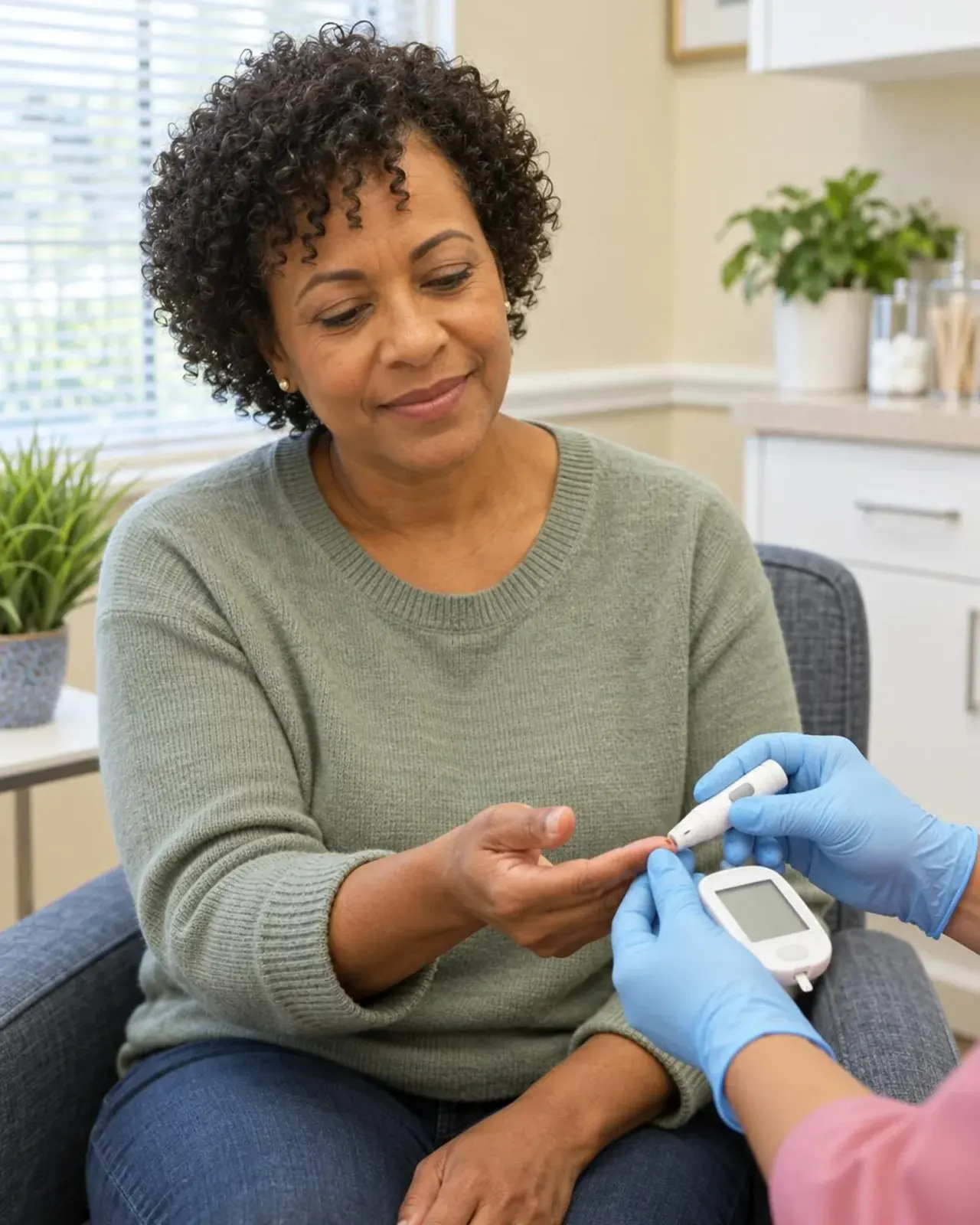
Is This You?
Signs You May Have Diabetes or Prediabetes
Recognizing When to Seek Help
These signs are easy to blame on a busy season or getting older, which is why a simple blood test is the only reliable way to know where you stand.
- Constant Thirst and Urination
- Tired After Eating
- Blurred Vision, Slow Healing, Tingling Feet
- A Borderline Lab Result
Treatments
Related Services
Services that support blood sugar control, weight and long-term health.


Your Questions
Frequently Asked Questions
About Diabetes
How often should my A1c be checked?
Every three months while treatment is changing, and at least twice a year once you are stable at goal. The A1c reflects average blood sugar over about three months, so testing more often adds little. Between tests, home readings or a continuous glucose monitor show the daily patterns behind the number.
What A1c should I aim for?
For many non-pregnant adults the American Diabetes Association recommends an A1c below 7 percent, but the right target is individual. A younger adult without complications may aim lower, while an older adult with other conditions or a history of severe lows may be safest slightly higher. Dr. Ortiz sets your target with you and explains why.
Can type 2 diabetes be reversed?
Some people reach remission, meaning a normal A1c without diabetes medication, most often through substantial weight loss early in the disease. Studies suggest remission is possible but not assured, and blood sugar can rise again if weight returns, so monitoring continues. Individual results vary.
Do you take my insurance for diabetes care?
No, Advanced Optimal Healthcare does not bill insurance for office visits at any membership level. Diabetes care is delivered through a flat monthly primary care membership with no copays or deductibles and discounted pricing on labs, imaging and medications. You keep your insurance for specialists and hospital care. Membership may be HSA eligible.
Is a nurse practitioner the right choice for managing my diabetes?
For most people with type 2 diabetes, yes. Anyone searching for a diabetes doctor near me is really looking for someone who orders the right labs, manages medications and follows up consistently, which is what a board-certified family nurse practitioner does. Dr. Ortiz coordinates with an endocrinologist for type 1 diabetes or complex cases.
Ready to Start?
Schedule Your Diabetes Consultation
- Phone
- (813) 330-6224
- Hours
- Mon & Fri 9am - 2pmTue & Thu 9am - 6pmWed 9am - 5pm
Scientific References
- American Diabetes Association. (2026). Standards of Care in Diabetes, current edition landing page (ADA Professional Practice Committee).
- Davies et al., Diabetes Care. (2022). Management of Hyperglycemia in Type 2 Diabetes, 2022. A Consensus Report by the American Diabetes Association (ADA) and the European Association for the Study of Diabetes (EASD). PMID: 36148880.
- Sherifali et al., Diabetes Care. (2025). Type 2 Diabetes Remission: A Systematic Review and Meta-analysis of Nonsurgical Randomized Controlled Trials. PMID: 40982327.