
Urinary Incontinence Treatment in Lutz, FL: Regain Control Without Surgery
Stress, urge and mixed incontinence care for women and men, with no surgery and no downtime.
- Common In:
- Women after childbirth or menopause, men after prostate treatment
- Primary Causes:
- Weak pelvic floor, overactive bladder, hormonal change
- Treatment Time:
- 28-minute Emsella sessions, fully clothed
- Results:
- Often within a few sessions; individual results vary

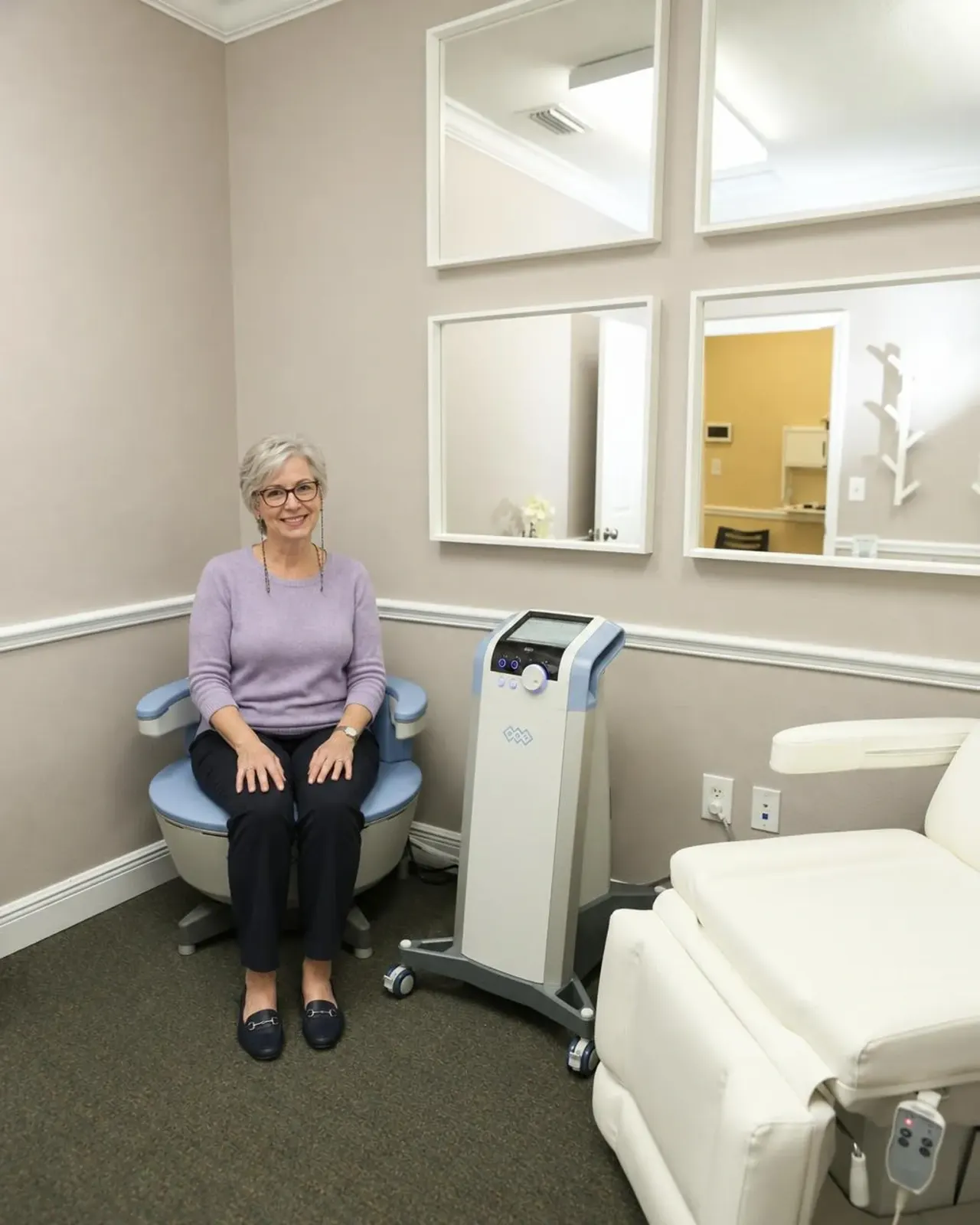
Understanding Bladder Leakage
What Is Urinary Incontinence?
Urinary incontinence is the accidental loss of urine, from a few drops when you laugh or lift to a sudden urge you cannot hold. If you have been searching for incontinence treatment near me in Lutz, FL, know that bladder leakage affects women and men of every age, and that it is treatable.
Stress, urge and mixed incontinence are the main types, and MedlinePlus notes that treatment depends on the type. Dr. Anilda Ortiz, DNP, APRN, FNP-C leads every evaluation, and options include Emsella Chair sessions, a non-invasive, FDA-cleared option that strengthens the pelvic floor while you sit fully clothed.
Medically reviewed by Dr. Anilda Ortiz, DNP, APRN, FNP-C. Last updated: October 2026.

The Science
Why Urinary Incontinence Happens
Pelvic Floor Basics
The pelvic floor is a hammock of muscle and connective tissue from the pubic bone to the tailbone. It supports the bladder, urethra, uterus or prostate and rectum, and works with the urethral sphincter to keep the outlet closed while the bladder fills. A healthy adult bladder holds roughly two cups of urine at low pressure; continence means the bladder stays relaxed while the pelvic floor holds firm until you choose to go.
Stress incontinence is a support problem. Each cough, laugh or lift sends a pressure spike onto the bladder, and a pelvic floor stretched by childbirth, thinned by lower estrogen, strained by chronic coughing or extra weight, or partly removed during prostate surgery lets the urethra open before the muscles respond.
Urge incontinence is a signaling problem: the bladder muscle contracts before the bladder is full, triggered by caffeine, alcohol, infection, high blood sugar from diabetes or nerve changes with age. Lower estrogen during menopause and perimenopause thins the urethral lining and worsens urgency. The National Institute of Diabetes and Digestive and Kidney Diseases explains why many patients have the mixed pattern.
Contributing Factors
What Makes Urinary Incontinence Worse?
Identifying Your Triggers
Several factors stretch, weaken or overstimulate the pelvic floor and bladder, usually in combination.
Pregnancy and Childbirth
Pregnancy and vaginal delivery stretch the pelvic floor and loosen the support under the urethra.
Menopause and Hormonal Change
Lower estrogen thins the urethra, bladder neck and vaginal tissue, weakening the seal that keeps urine in.
Prostate Surgery and Enlargement
Prostate removal or radiation can weaken the sphincter, and an enlarged prostate irritates the bladder.
Excess Weight
Abdominal weight presses on the bladder with every step and cough, so leaks often ease as weight comes down.
Chronic Straining
A long-term cough, constipation or heavy lifting delivers pressure spikes that wear down pelvic support.
Bladder Irritants and Blood Sugar
Caffeine, alcohol and sweeteners trigger urgency, and high blood sugar raises urine volume and affects bladder nerves.
Deeper Understanding
How We Evaluate Bladder Leakage in Lutz
History, Exam, Labs and a Clear Plan
Your first visit is a conversation, not a procedure. Dr. Ortiz asks when leaks happen, what triggers them, how often you go day and night, your fluid and caffeine intake, your medications, and your history of deliveries or pelvic and prostate surgery. A short bladder diary often tells us more than any single test, and a focused exam checks pelvic floor tone and prolapse.
Blood draws are done in the office and certain lab tests run on site: a urinalysis rules out an infection that mimics urgency, and glucose or A1c testing matters when undiagnosed diabetes is driving the bladder. When weight is part of the picture, an InBody scan sets a baseline.
Blood in the urine, pain with urination, recurrent infections, trouble emptying, new leg numbness, a vaginal bulge, or leakage after prostate surgery that is not improving belong with a urologist or urogynecologist; we make and coordinate that referral. Otherwise the plan pairs home pelvic floor training and bladder habit changes with Emsella sessions. Emsella is FDA-cleared under 510(k) K181497 for stress, urge and mixed urinary incontinence and for pelvic floor strengthening. A typical course is six 28-minute sessions over about three weeks, run by our trained team under Dr. Ortiz's supervision. Individual results vary.
Why Us
Why Choose Advanced Optimal Healthcare for Urinary Incontinence in Lutz, FL
Unhurried, Judgment-Free Care
Dr. Ortiz has practiced as a family nurse practitioner since 2011 with more than a decade in endocrine care, so she sees bladder leakage in the context of hormones, blood sugar, weight and medications. Visits are scheduled one patient at a time.
-
A Conversation First
A complimentary 20-minute consultation lets you learn whether Emsella fits before you commit.
-
Whole-Person Evaluation
Blood sugar, hormones, weight, infections and medications are checked alongside the pelvic floor.
-
Non-Invasive Technology
FDA-cleared Emsella sessions run fully clothed by our trained team under Dr. Ortiz's supervision.
-
Honest Referrals
If your symptoms call for a urologist or urogynecologist, we make the referral and coordinate the care.
Finding Your Best Approach
Urinary Incontinence Treatment Options in Lutz
Every plan centers on the Emsella Chair, matched to your type of leakage and what you can do at home.
| Treatment | Best For | Session Time | Results Timeline |
|---|---|---|---|
| Emsella for stress incontinence | Leaks with coughing, lifting or exercise | About 28 minutes, fully clothed | Often noticed within the first sessions |
| Emsella for urge and mixed incontinence | Sudden urges with or without stress leaks | About 28 minutes, fully clothed | Six sessions over three weeks, then review |
| Emsella with lifestyle and home measures | Leaks tied to weight, caffeine or constipation | 28 minutes plus coaching | Habit changes help within weeks |

Is This You?
Signs You May Have Urinary Incontinence
Recognizing When to Seek Help
Recognizing the pattern of your leaks is the first step toward the right plan, and none of these signs are something you have to accept.
- Leaks With Coughing or Sneezing
- Sudden Urges You Cannot Hold
- Frequent Nighttime Trips
- Pads or Dark Clothing as Backup
- Avoiding Exercise or Travel
- Leaks After Prostate Treatment
Treatments
Related Services
Services that support bladder control and pelvic health in Lutz.

Your Questions
Frequently Asked Questions
About Urinary Incontinence
Can urinary incontinence be treated without surgery or medication?
Yes, for many patients. Pelvic floor muscle training is the first-line recommendation for stress and mixed incontinence, bladder training helps urge symptoms, and the Emsella Chair adds thousands of pelvic floor contractions per session with no needles or downtime. Surgery and medication remain options if conservative care is not enough. Individual results vary.
How many Emsella sessions will I need, and what do they feel like?
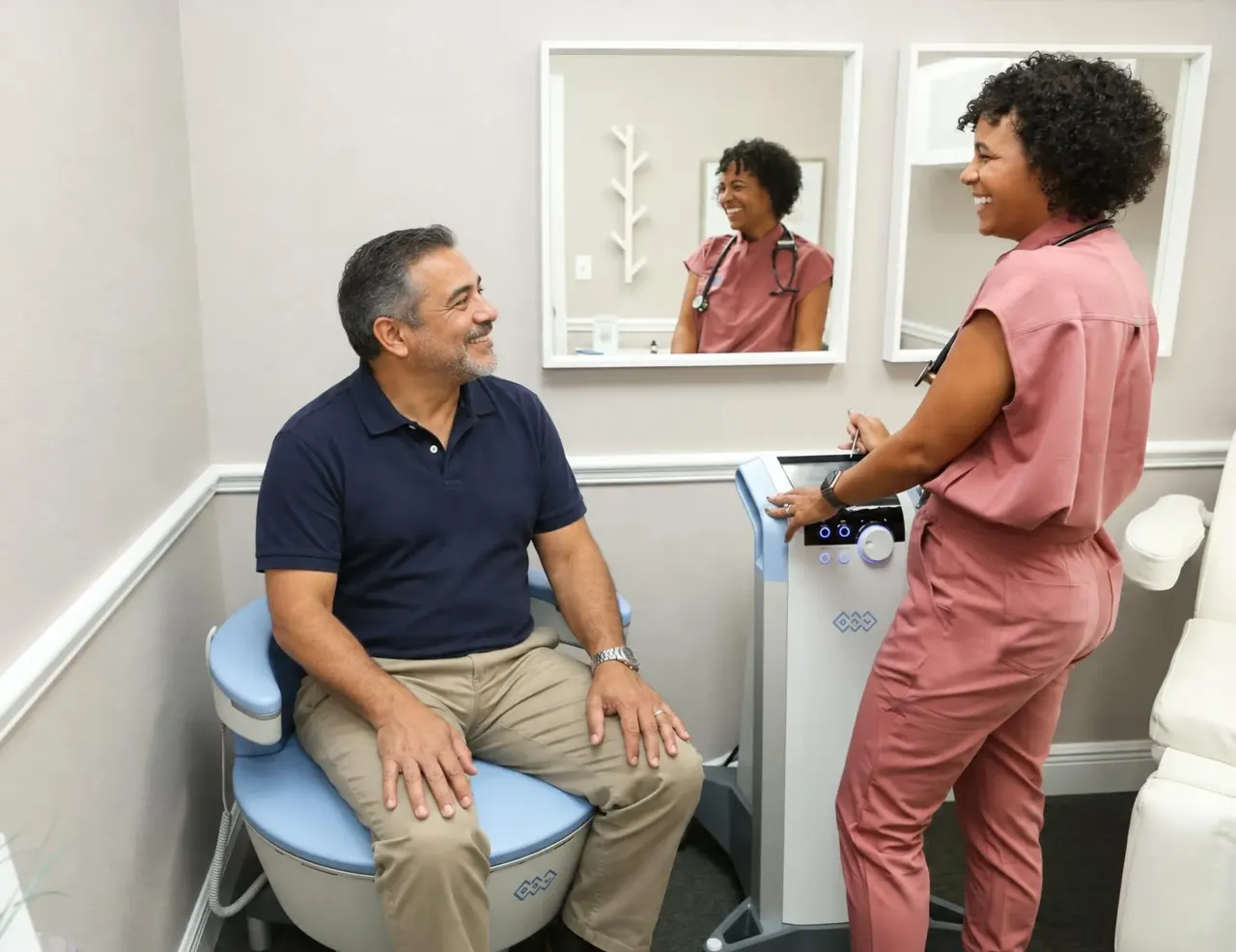
A typical course is six 28-minute sessions over about three weeks. You sit fully clothed while focused electromagnetic energy contracts the pelvic floor; patients describe a strong tingling and pulling sensation, not pain. Some notice fewer leaks after the first sessions, with improvement building over the following weeks. Individual results vary.
Does Emsella help men with incontinence?
Yes. Emsella is offered to men as well as women, and it strengthens the same pelvic floor that supports continence after prostate surgery. Published studies suggest HIFEM therapy may reduce post-prostatectomy leakage for many men. Men who also notice changes in sexual function can read about the pelvic floor connection on our erectile dysfunction page.
How much does incontinence treatment cost in Lutz?
The Emsella consultation is complimentary, and sessions start from $250. Package pricing is discussed at that consultation, flexible payment plans through Cherry are available, and primary care members receive priority scheduling and discounted pricing on wellness services.
When should I see a urologist instead?
See a specialist promptly for blood in your urine, pain with urination, repeated infections, difficulty emptying your bladder, new leg numbness or weakness, or leakage after prostate surgery that is not improving. Dr. Ortiz screens for these at your first visit and refers when needed.
Ready to Start?
Schedule Your Urinary Incontinence Consultation
- Phone
- (813) 330-6224
- Hours
- Mon & Fri 9am - 2pmTue & Thu 9am - 6pmWed 9am - 5pm
Scientific References
- U.S. Food and Drug Administration. (2018). 510(k) summary K181497 for the HPM-6000UF (BTL Emsella) electromagnetic pelvic floor stimulator for urinary incontinence, cleared November 14, 2018.
- Leonardo et al., Neurourol Urodyn. (2025). Noninvasive High-Intensity Focused Electromagnetic Therapy in Women With Urinary Incontinence: A Systematic Review and Meta-Analysis. PMID: 39760417.
- Samuels et al., Lasers Surg Med. (2019). Safety and Efficacy of a Non-Invasive High-Intensity Focused Electromagnetic Field (HIFEM) Device for Treatment of Urinary Incontinence and Enhancement of Quality of Life. PMID: 31172580.
- Tosun et al., Ther Clin Risk Manag. (2025). Evaluating the Efficacy of High-Intensity Focused Electromagnetic (HIFEM) Therapy for Postprostatectomy Incontinence in Men. PMID: 40909763.
- Alouini et al., Int J Environ Res Public Health. (2022). Pelvic Floor Muscle Training for Urinary Incontinence with or without Biofeedback or Electrostimulation in Women: A Systematic Review. PMID: 35270480.