
Obesity and Weight Gain in Lutz, FL: Medical Answers, Not Willpower
Understand why the weight is not moving, then treat the cause with a plan built from your labs.
- Common In:
- Adults 30 to 64, men and women
- Primary Causes:
- Biology, hormones, environment
- Treatment Time:
- 12-week program, then monthly
- Results:
- Gradual, over 3 to 12 months

Understanding Obesity
What Is Obesity?
Obesity is a chronic medical condition in which excess body fat raises the risk of type 2 diabetes, high blood pressure, sleep apnea, fatty liver and joint damage. The American Medical Association has classified it as a chronic disease since 2013, which matters for obesity treatment in Lutz, FL: it is managed with evaluation, treatment and follow-up, not a lecture about trying harder.
Per the National Institute of Diabetes and Digestive and Kidney Diseases, a BMI of 30 or higher is obesity, though BMI is a screen, not a verdict. Dr. Anilda Ortiz, DNP, APRN, FNP-C evaluates weight gain with a history, exam and labs drawn in the office.
Medically reviewed by Dr. Anilda Ortiz, DNP, APRN, FNP-C. Last updated: October 2026.

The Science
Why Obesity and Weight Gain Happen
Understanding the Root Causes
Body weight is regulated by a feedback loop between fat tissue, the gut and the brain. Hormones such as leptin, insulin and GLP-1 report how much energy is stored and how recently you ate, and the hypothalamus adjusts hunger, fullness and metabolic rate in response. When that loop drifts toward storage, appetite rises and energy use falls, so the same meals now produce weight gain.
Dieting pushes against this system rather than resetting it. After meaningful weight loss, fullness hormones drop, hunger hormones rise and resting metabolism falls below what the new weight would predict. The NIDDK summary of obesity-related health risks explains why regain matters: blood pressure, blood sugar, cholesterol and liver enzymes tend to climb with it.
Genetics set the baseline, which is why two people eating the same way land at different weights. Sleep loss, chronic stress, certain medications, menopause, low testosterone and an underactive thyroid shift the same hormonal controls. That is why the practice treats weight gain as a question to answer, not a flaw to correct.
Contributing Factors
What Drives Obesity and Weight Gain?
Identifying Your Triggers
These factors push the body's weight set point upward, usually several at once. Naming yours is the first step toward obesity treatment that works.
Genetics and Family History
Inherited differences in appetite signaling and metabolism explain much of why weight varies between people with similar diets.
Hormonal Changes
An underactive thyroid, insulin resistance, perimenopause and low testosterone each slow metabolism or shift fat storage toward the abdomen.
Sleep Loss and Stress
Short or broken sleep raises hunger hormones and cortisol, increasing cravings for calorie-dense food and slowing fat loss.
Medications
Some antidepressants, steroids, insulin, beta blockers and antihistamines promote weight gain and may deserve a substitution.
Food Environment
Ultra-processed foods, large portions and constant availability override fullness signals that evolved for scarcity, not abundance.
Deeper Understanding
How We Evaluate Obesity at Advanced Optimal Healthcare
Schedule a Complimentary ConsultationLabs and Body Composition Before Any Prescription
The first visit is a conversation, not a weigh-in. Dr. Ortiz reviews your weight history, past diets, medications, sleep, hormonal symptoms and family history, checks blood pressure, waist circumference and BMI, and draws blood in the office so you are not sent elsewhere for lab work.
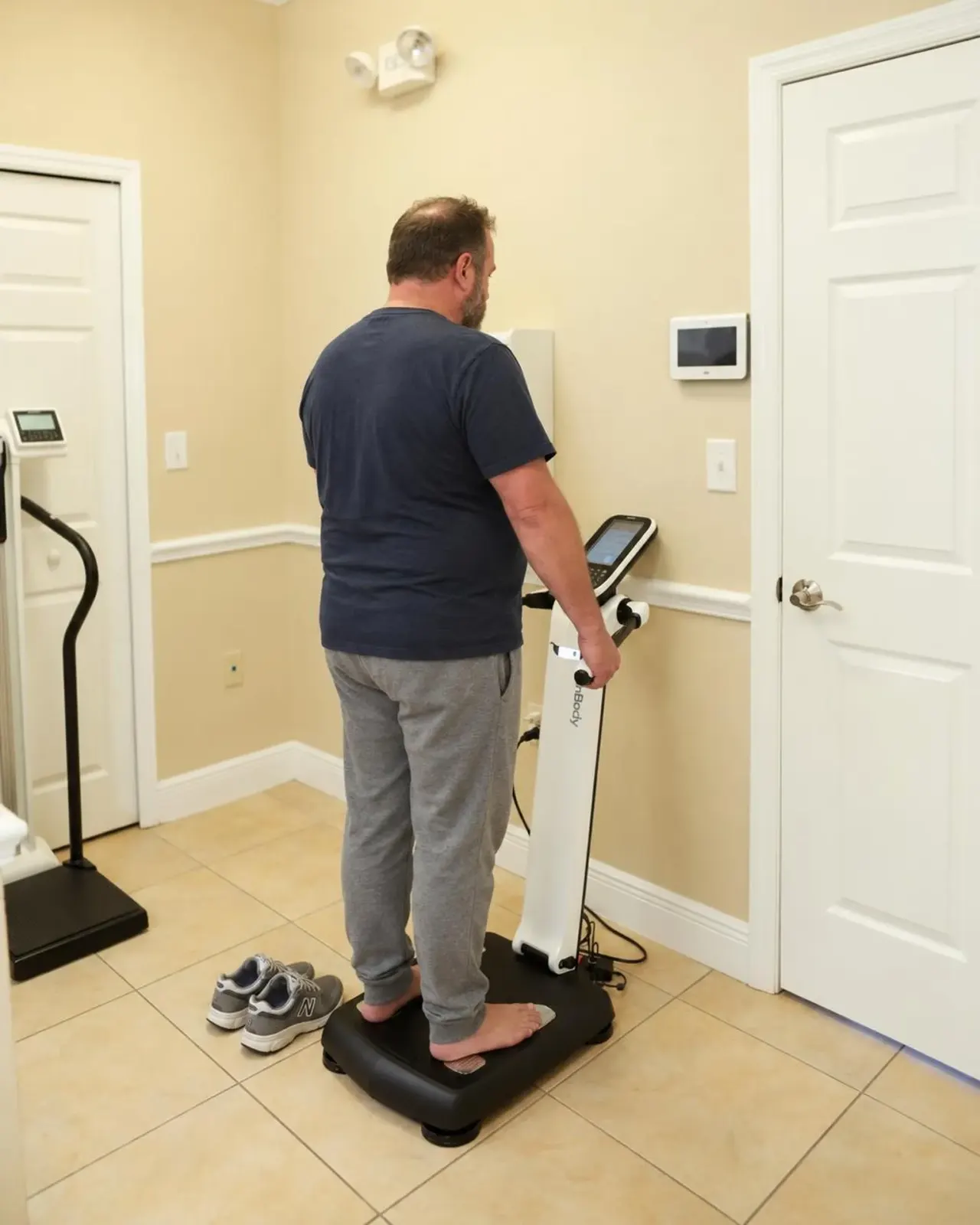
Baseline labs typically include fasting glucose and hemoglobin A1c, a lipid panel, liver and kidney function, thyroid function (TSH and free T4) and, when symptoms point there, sex hormones, vitamin D and B12. An InBody body composition scan measures skeletal muscle, body fat and visceral fat in under a minute, showing what the weight is made of. Primary care members receive discounted lab pricing.
The plan follows the findings. Some patients need thyroid treatment or a medication change first. Others qualify for the supervised medical weight loss program: 12 weeks of weekly one-hour sessions, nutrition and behavioral counseling, and prescription medication when appropriate, with repeat labs and body composition along the way. Type 2 diabetes and high blood pressure are managed in the same visits.
Why Us
Why Choose Advanced Optimal Healthcare for Obesity and Weight Gain in Lutz, FL
Expert Care in Lutz
Dr. Ortiz has spent more than ten years in endocrinology, diabetes and thyroid care, so weight gain is evaluated through hormones and metabolism, not willpower. Visits are unhurried and the plan comes from your labs and body composition, not a template.
-
Endocrine-Trained Provider
A board-certified family nurse practitioner with a decade of diabetes and thyroid care looks for causes generic weight programs miss.
-
Labs Drawn in the Office
Blood work is collected on site at the first visit, so answers arrive without extra trips.
-
Body Composition, Not Just a Scale
InBody scans track muscle, fat and visceral fat so the plan protects strength while fat comes off.
-
Every Tool in One Place
Counseling, prescription medication when appropriate, Emsculpt Neo and ongoing primary care are coordinated by one provider.
Finding Your Best Approach
Obesity Treatment Options Comparison
The services Advanced Optimal Healthcare offers for obesity and weight gain. Dr. Ortiz recommends one or a combination after your evaluation.
| Treatment | Best For | Session Time | Results Timeline | Maintenance |
|---|---|---|---|---|
| Medical Weight Loss | Supervised, lab-guided program | Weekly one-hour sessions | Gradual over 12 weeks | Monthly maintenance plans |
| Semaglutide | BMI 30+, or 27+ with a related condition | Weekly injection | Builds over months | Ongoing provider review |
| Tirzepatide | Dual-action option, same candidates | Weekly injection | Builds over months | Ongoing provider review |
| InBody Scan | Measuring muscle, fat and visceral fat | Under one minute | Immediate report | Repeat every 4 to 6 weeks |
| Emsculpt Neo | Targeted muscle building and fat reduction | 30 minutes | 1 to 3 months after 4 sessions | Touch-ups as advised |

Is This You?
Signs You May Be Dealing With Obesity or Unexplained Weight Gain
Recognizing When to Seek Help
Any one of these patterns is a reason to choose a medical evaluation over another diet.
- Weight Climbs Despite Effort
- Lose Then Regain
- Weight Around the Middle
- Snoring and Daytime Fatigue
Treatments
Related Services
Services that address obesity and weight gain at Advanced Optimal Healthcare.


Your Questions
Frequently Asked Questions
About Obesity and Weight Gain
What BMI counts as obesity, and is BMI accurate?
A BMI of 30 or higher is classed as obesity, 25 to 29.9 as overweight and 40 or higher as severe obesity. BMI cannot separate muscle from fat, so the practice pairs it with waist circumference, labs and body composition so a muscular adult is not mislabeled and a normal-BMI adult with high visceral fat is not missed.
Who qualifies for semaglutide or tirzepatide?
Per FDA labeling, adults with a BMI of 30 or higher, or 27 or higher with a weight-related condition such as high blood pressure or type 2 diabetes. Weekly semaglutide injections and dual-action tirzepatide are prescribed only within a supervised program after Dr. Ortiz confirms eligibility with labs and screens for contraindications such as a family history of medullary thyroid carcinoma. Wegovy and Zepbound are the brands approved for chronic weight management.
How much weight can I expect to lose, and will it come back?
In the pivotal trials, adults on semaglutide 2.4 mg lost about 15 percent of body weight over 68 weeks and adults on the highest tirzepatide dose about 21 percent over 72 weeks, alongside diet and activity changes. People who stopped semaglutide in the STEP 1 extension regained roughly two thirds of that loss within a year, which is why monthly maintenance plans follow the program. Individual results vary.
How do I keep muscle while losing weight?
Eat protein at every meal, do resistance exercise two to three times a week, and track body composition, not just the scale. Part of any weight lost, including on GLP-1 medication, is lean mass, so Dr. Ortiz repeats InBody scans during treatment and may add Emsculpt Neo sessions for targeted muscle building. Our article on how to keep muscle while losing weight has the details.
What does obesity treatment cost in Lutz?
The supervised 12-week medical weight loss program is $1,999, plus a $299 initial consultation covering assessment, labs and the InBody scan. Emsculpt Neo sessions start at $850 and InBody scans at $45. Primary care members receive priority scheduling and discounted pricing on wellness services, and flexible payment plans are available through Cherry.
Ready to Start?
Schedule Your Obesity and Weight Gain Consultation
- Phone
- (813) 330-6224
- Hours
- Mon & Fri 9am - 2pmTue & Thu 9am - 6pmWed 9am - 5pm
Scientific References
- Rubino et al., Lancet Diabetes Endocrinol. (2025). Definition and diagnostic criteria of clinical obesity. PMID: 39824205.
- Wilding et al., N Engl J Med. (2021). Once-Weekly Semaglutide in Adults with Overweight or Obesity. PMID: 33567185.
- Jastreboff et al., N Engl J Med. (2022). Tirzepatide Once Weekly for the Treatment of Obesity. PMID: 35658024.
- Wilding et al., Diabetes Obes Metab. (2022). Weight regain and cardiometabolic effects after withdrawal of semaglutide: The STEP 1 trial extension. PMID: 35441470.
- Neeland et al., Diabetes Obes Metab. (2024). Changes in lean body mass with glucagon-like peptide-1-based therapies and mitigation strategies. PMID: 38937282.
- U.S. Food and Drug Administration. (2021). Wegovy (semaglutide) injection 2.4 mg, NDA 215256: approval record and current prescribing information (Drugs@FDA).