
Depression in Lutz, FL: Care When Your Antidepressant Has Not Done Enough
An unhurried evaluation, medication review and FDA-cleared Exomind TMS for adults with major depression.
- Common In:
- Adults of every age
- Exomind Is For:
- Adults with major depression
- Typical Course:
- 5 days a week, 4-6 weeks
- FDA Status:
- 510(k) cleared, 2022

Understanding Depression
What Is Depression?
Major depressive disorder is more than a hard week. It is low mood or loss of interest most of the day, nearly every day, for at least two weeks, together with changes in sleep, appetite, energy, concentration or self-worth that get in the way of work and home life. The National Institute of Mental Health describes it as one of the most common mental health conditions in the United States, and it is treatable.
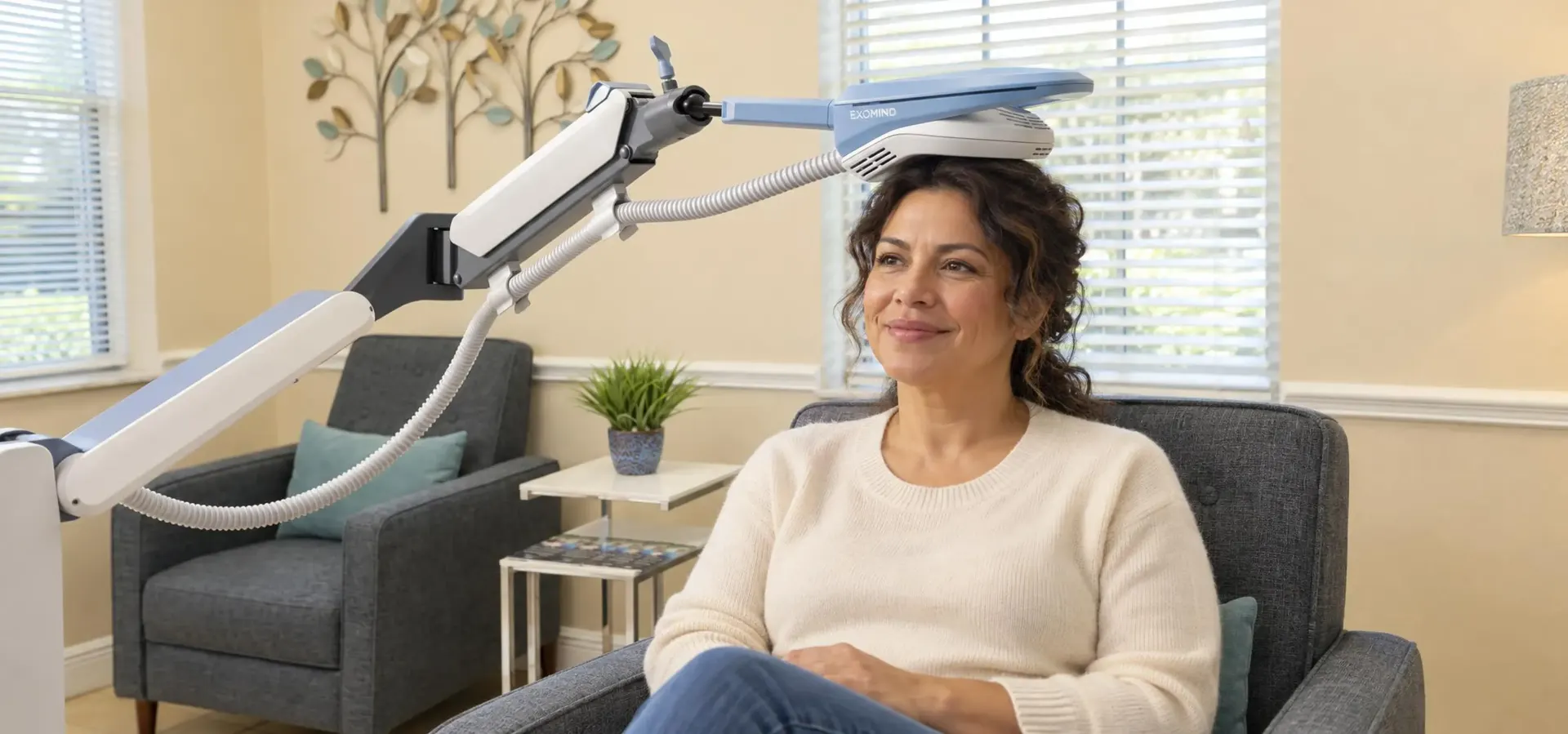
Many adults start an antidepressant and feel only part of the way better. For adults whose major depression did not improve enough with antidepressant medication in the current episode, Exomind TMS therapy is a non-invasive option with FDA 510(k) clearance K212723. Dr. Anilda Ortiz, DNP, APRN, FNP-C evaluates you first, reviews your medications and coordinates with your therapist or prescriber, for patients from Lutz, Land O' Lakes, Wesley Chapel and the greater Tampa area.
Medically reviewed by Dr. Anilda Ortiz, DNP, APRN, FNP-C. Last updated: November 2026.

The Science
Why Depression Happens
Understanding the Root Causes
Depression rarely has a single cause. Genetics, long-running stress, loss, chronic illness, poor sleep and some medications all raise the risk, and they often stack. Brain imaging studies show reduced activity in the left dorsolateral prefrontal cortex in many people with depression, an area involved in mood regulation, motivation and decision-making.
Medical conditions can look like depression or make it worse. An underactive thyroid, anemia, low vitamin D or B12, uncontrolled blood sugar and hormone shifts in perimenopause or low testosterone can all drain mood and energy, which is why a primary care evaluation with labs is part of the first visit here.
Antidepressants and talk therapy help many people, but not everyone reaches full recovery with the first medication. Transcranial magnetic stimulation was developed for that group: it targets the left prefrontal cortex directly with magnetic pulses rather than working through the whole body like a pill.
Contributing Factors
What Makes Depression More Likely?
Identifying Your Triggers
These are the factors Dr. Ortiz looks at first, because each one changes the plan.
Family History
Depression in a parent or sibling raises your own risk, and earlier episodes make another one more likely.
Stress and Loss
Grief, caregiving, job strain and relationship changes can trigger an episode, especially when they pile up.
Medical Conditions
Thyroid disease, anemia, diabetes, chronic pain and hormone changes can drive low mood and fatigue.
Sleep Problems
Ongoing insomnia both signals and feeds depression, and fixing sleep is often part of recovery.
Medications and Alcohol
Some prescriptions, alcohol and other substances can lower mood or blunt the effect of treatment.
Deeper Understanding
How We Evaluate Depression at Advanced Optimal Healthcare
Schedule a Complimentary ConsultationHistory, Questionnaire and Labs Before Any Treatment
The first visit covers your history, current and past medications, how long this episode has lasted and what has already been tried. Dr. Ortiz uses a standard depression questionnaire to measure where you are today and checks labs in the office when thyroid, anemia, vitamin levels or hormones may be part of the picture.
When major depression has not improved enough with antidepressant medication in the current episode, Exomind TMS therapy may be recommended. Sessions are given in the office about 5 days a week for 4-6 weeks, with no sedation and no downtime, and you keep taking your medication and seeing your therapist unless your prescriber advises a change. Progress is re-measured with the same questionnaire during the course.
Exomind is not right for everyone. People with metal or implanted devices in or near the head, or a history of seizures, are screened carefully and may need another option. If you are thinking about harming yourself, call or text 988 (Suicide and Crisis Lifeline) or 911 now. Exomind is not an emergency treatment.
Why Us
Why Choose Advanced Optimal Healthcare for Depression Care in Lutz, FL
Expert Care in Lutz
Depression care here starts with a medical evaluation, not a device. The same provider who reviews your labs and medications also supervises your Exomind course and follows up afterward.
-
FDA-Cleared Option
Exomind is used only for its cleared indication: major depression in adults whose antidepressant has not helped enough.
-
Medical Causes Checked
Thyroid, anemia, vitamin and hormone labs are drawn in the office so a medical driver is not missed.
-
Works With Your Care
Your medication and therapy continue, and Dr. Ortiz coordinates with your other clinicians.
-
Progress Measured
A standard depression questionnaire is repeated during the course so results are tracked, not guessed.
Is This You?
Signs Your Depression Needs Attention
Recognizing When to Seek Help
If several of these have lasted two weeks or longer, it is time for an evaluation rather than waiting it out.
- Low Mood Most Days
- Lost Interest
- Sleep and Energy Changes
- Antidepressant Not Enough
- Daily Life Slipping
Treatments
Related Services
Services that support recovery from depression once the evaluation is done.

Your Questions
Frequently Asked Questions
About Depression and Exomind
What is Exomind cleared to treat?
Exomind is FDA cleared for major depressive disorder in adults who did not achieve satisfactory improvement from prior antidepressant medication in the current episode. That is the only use offered here.
Do I have to stop my antidepressant?
No. Exomind works alongside your current medication and therapy. Keep taking your medication unless your prescriber advises a change, and Dr. Ortiz coordinates with your other clinicians.
How long does a course take?
The schedule studied for depression is one session a day, about 5 days a week, for 4-6 weeks. Each session takes about 20-40 minutes, with no sedation and no downtime, so you can drive and return to work afterward.
When will I feel better?
Improvement is gradual. Some people notice changes within a few weeks, and the clinical trials measured results after 4-6 weeks of weekday sessions. Dr. Ortiz checks your progress with a standard questionnaire during the course. Individual results vary.
Is TMS safe?
In clinical trials the most common side effects were scalp discomfort and headache, which usually ease during the first week. Seizure is a rare risk, so everyone is screened before starting. People with metal implants in or near the head may not be candidates.
What if I am in crisis?
Exomind is not an emergency treatment. If you are thinking about harming yourself, call or text 988 to reach the Suicide and Crisis Lifeline, or call 911.
Ready to Start?
Schedule Your Depression Consultation
- Phone
- (813) 330-6224
- Hours
- Mon & Fri 9am - 2pmTue, Wed & Thu 9am - 6pm
Scientific References
- Kessler et al., Arch Gen Psychiatry. (2005). Prevalence, severity, and comorbidity of 12-month DSM-IV disorders in the National Comorbidity Survey Replication. PMID: 15939839.
- O'Reardon et al., Biol Psychiatry. (2007). Efficacy and safety of transcranial magnetic stimulation in the acute treatment of major depression: a multisite randomized controlled trial. PMID: 17573044.
- George et al., Arch Gen Psychiatry. (2010). Daily left prefrontal transcranial magnetic stimulation therapy for major depressive disorder: a sham-controlled randomized trial. PMID: 20439832.
- Berlim et al., Psychol Med. (2014). Response, remission and drop-out rates following high-frequency repetitive transcranial magnetic stimulation (rTMS) for treating major depression: a systematic review and meta-analysis of randomized, double-blind and sham-controlled trials. PMID: 23507264.
- Carpenter et al., Depress Anxiety. (2012). Transcranial magnetic stimulation (TMS) for major depression: a multisite, naturalistic, observational study of acute treatment outcomes in clinical practice. PMID: 22689344.
- Rossi et al., Clin Neurophysiol. (2021). Safety and recommendations for TMS use in healthy subjects and patient populations, with updates on training, ethical and regulatory issues: Expert Guidelines. PMID: 33243615.
- U.S. Food and Drug Administration. (2022). 510(k) K212723 for the BTL-995-rTMS, cleared March 4, 2022 for major depressive disorder in adults who did not achieve satisfactory improvement from prior antidepressant medication in the current episode. FDA summary.